

November 12, 2025
Disinfection Basics for Cold and Flu Season
With the cooler weather comes the start of cold and flu season. Especially in the hustle and bustle of New York City, it can be difficult to avoid germy surfaces. There are millions of people passing through the city each day, so you need to do what you can to stay healthy.
That includes not only cleaning your home, but also disinfecting it regularly to stop the spread of germs. Below, we’ll cover the difference between cleaning and disinfecting, what surfaces you should clean, and how to use disinfectants correctly. We’ll also provide simple disinfecting routines you can put into practice now and share tips to practice proper hygiene.
You don’t have to fall victim to the cold and flu virus this year with the right cleaning and disinfecting routines. And, if you don’t have time to do it, professional cleaners in New York City can help.
Cleaning vs. Disinfecting
Many people use the terms cleaning and disinfecting interchangeably, but they are actually different.
- Cleaning focuses on removing dirt. When you think about cleaning, you are typically tidying up. You’re removing dirt, dust, and debris from your home. Typical cleaning processes include wiping, scrubbing, vacuuming, steaming, dusting, etc.
- Disinfecting kills germs. Because germs can live on surfaces for several days, it’s important to not just clean an area, but also disinfect it. This helps eliminate viruses and germs from surfaces. Disinfectants contain active ingredients that have been proven to kill germs and are often regulated by the Environmental Protection Agency (EPA).
Cleaning and disinfecting often go hand-in-hand; however, they are different processes. You can clean without disinfecting or sanitizing, but it’s not recommended to keep your home germ-free during cold and flu season.
High-Touch Surfaces to Target
Viruses can spread from person-to-person contact or on surfaces, so it’s important to know which areas in your home to target when disinfecting. You should focus on high-touch surfaces, including:
- Doorknobs
- Light switches
- Remotes
- Faucets
- Toilet handles
- Refrigerator handles
- Trash cans
- Stove knobs
- Cell phones
- Keyboards
- Gaming controllers
If you were sick, you will need to consider all the things you may have touched and plan to disinfect them to avoid others in your home from catching the illness.
Using Disinfectants Correctly
Disinfectant cleaning products are regulated by the EPA to prove they are effective against bacteria, fungi, and viruses. Disinfectants need to meet pesticide standards to ensure they are safe to use.
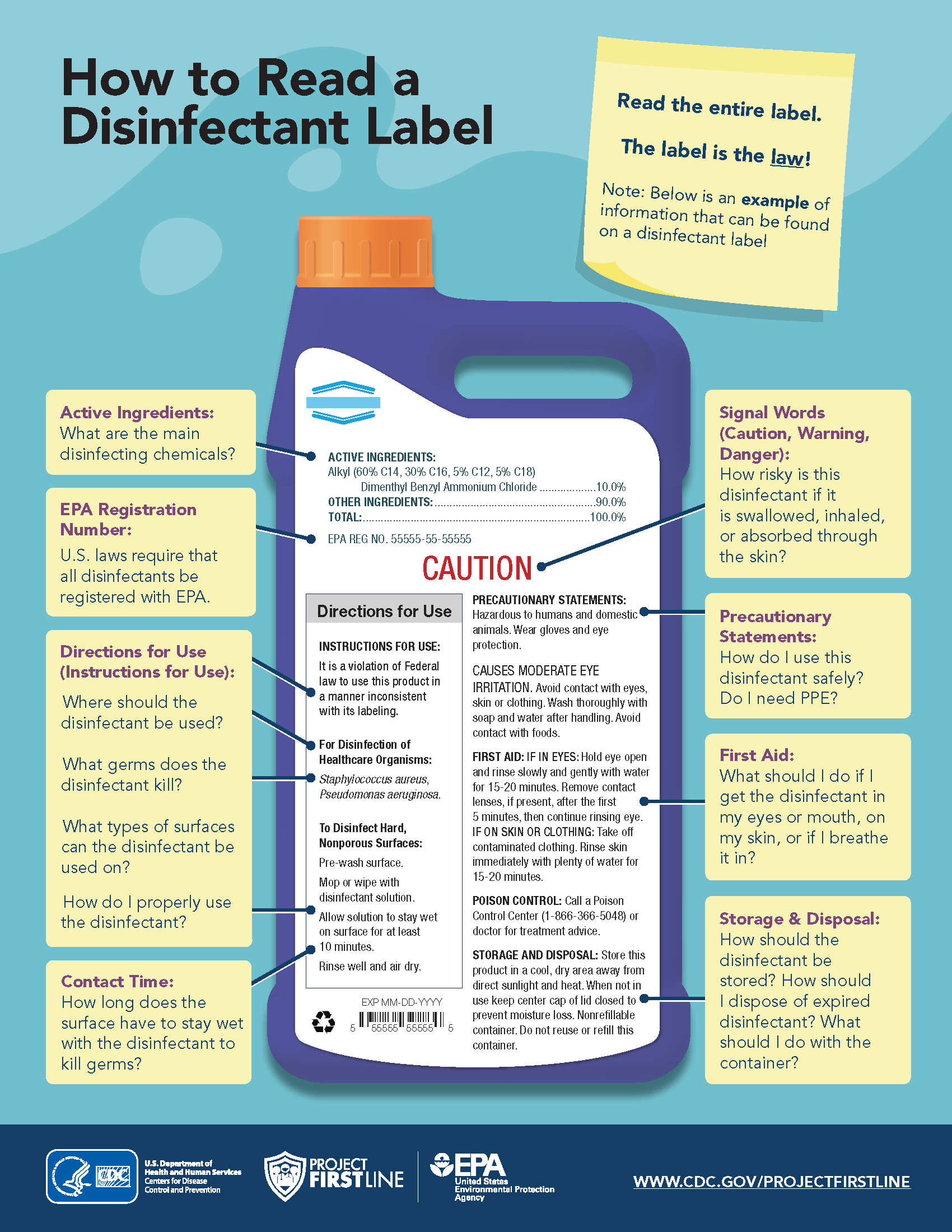
Disinfectants can be sprays, liquids, wipes, or powders. They should have clear instructions on how to use them effectively, including:
- Where to use them. Some disinfectants are not safe to be used on porous surfaces, items that will be used to eat and other conditions.
- How to use them, including how far away from the surface they should be sprayed, if the products need to be diluted, and how long the product should sit (contact time) before wiping it off.
- How long it takes for the product to work. This is often called the contact time, and it’s critical that the surface remains wet during the entire contact time. If the surface dries, you will need to reapply the disinfectant and start the contact time over to ensure it remains active.
Be sure to store cleaning products out of reach of children and pets, often in a locked cabinet that is not easily accessible. Disinfectants can be dangerous if they are accidentally ingested.
EPA List N Disinfectants
The EPA has various classifications for disinfectants depending on the types of germs they are effective against. The EPA List N disinfectants are products that are effective against COVID-19. Currently, there are nearly 700 cleaning products that have been approved by the EPA.
Some of the most common products include:
- Lysol cleaners (antibacterial and all-purpose cleaners)
- Clorox (bleach, wipes, and cleaners)
- Germ Away
- Mean Green (multi-surface cleaner, pine powder, and disinfectant concentrate).
You may also dilute bleach, using approximately one-third cup of bleach per gallon of water to clean. However, bleach can have a strong smell, so you should only use this solution if you have good ventilation. Do not mix bleach with other cleaning solutions, as it can cause damage.
Citric acid can be used if you prefer a more natural solution with less odor and chemicals. To make a citric acid disinfectant, mix one tablespoon of citric acid powder per cup of warm water and spray it on surfaces. Citric acid may be less effective than bleach cleaners, but it can be better for more sensitive environments.
If you have questions about what cleaners are effective against bacteria and viruses, you can always read the label and look up the EPA registration number for more information.

Simple Disinfecting Routine
When it comes to disinfecting, more is more. The more you disinfect your surfaces, the more likely it is that you will be able to stop germs in their tracks. Consider the following simple disinfecting routine by space type to make it easier.
Make sure you are disinfecting in a ventilated space and using the right personal protective equipment (gloves, masks, etc.) to keep yourself safe when disinfecting. Some cleaners have active ingredients that can be harmful to the skin.
Home
You should regularly clean your home, but you don’t always have to disinfect surfaces. Consider disinfecting high-touch areas daily or after an illness. Otherwise, you can disinfect as needed.
- Identify high-touch surfaces within your home. These are areas that are regularly touched by multiple people throughout the day, including door knobs, light switches, bathroom surfaces, and more.
- Clean the areas first. You can use multipurpose cleaners or soap and water. You want to remove any dirt or grime so the area can be properly disinfected.
- Disinfect using an EPA-certified disinfectant. You can also use a bleach solution, citric acid, and other cleaners to help disinfect and kill germs.
You should disinfect areas that are visibly dirty, such as bathrooms, kitchen counters, and other surfaces that could carry viruses and bacteria.
Office
Offices are high-traffic locations that need to be routinely disinfected, especially if you are working in a public or shared office. Surfaces should be disinfected daily, and you should deep clean the space 2-4 times a year based on the traffic.
- Tidy up the office. Wipe down desks, chairs, elevator buttons, door handles, bathroom facilities, water fountains, and other shared resources.
- Disinfect the surfaces you cleaned. Make sure that you let the disinfectant sit for the right amount of time before removing it to ensure it kills all germs.
- Disinfect electronics. Confirm that your disinfectant is safe for use on electronics. If it’s not, consider using wipes and gently wipe down the surface. Keyboards, monitors, and mice often harbor germs.
You may want to increase the frequency during cold and flu season to stop the spread of germs.
Childcare
Children are just learning to explore their surroundings, and daycare and other childcare resources are often breeding grounds for germs. You should disinfect surfaces daily. If toys or other items were placed in mouths, you should disinfect them immediately.
- Clean all surfaces. Playtables, lunch tables, changing tables, counters, bathrooms, floors, etc., should be cleaned. Small hands touch everything, and germs can live on surfaces for several days.
- Disinfect the cleaned surfaces. Be thorough in your disinfecting process as germs quickly spread in childcare settings due to the close proximity.
- Rinse disinfected surfaces. You need to remove the chemical residue from the surface with water. Most disinfectants are not safe for consumption, and children often put things in their mouths that shouldn’t be there.
Keep all cleaning and disinfecting supplies out of reach from children to prevent accidental ingestion.
Post-illness Disinfection Routine
Whether you and your family have been sick or you’ve recently come into contact with someone who was ill, there are steps you can take to disinfect your home.
- Do the laundry. Strip your bed, grab your towels, and collect all your laundry. You need to wash everything that got dirty when you were sick.
- Clean and disinfect high-touch surfaces. Start with door knobs, light switches, counter tops, bathroom surfaces, kitchen areas, and any other surfaces you may have touched when you were sick.
- Disinfect the areas you were resting in. You can spray down your bed, couches, chairs, etc., to remove the germs.
- Open the windows. If you’re able to, let some fresh air into your home. When you’re sick, the air quality can feel stagnant and musty. Fresh air can breathe new life into your home and help you kick the illness to the curb.
Practicing Proper Hygiene
One of the best ways that you can avoid getting sick this cold and flu season is by practicing proper hygiene. Good habits can prevent you from catching germs.
- Handwashing: Wash your hands frequently, especially if you are in public areas. You should use soap and water, lathering them for at least 20 seconds before rinsing. You can also use hand sanitizer if soap and water are not easily accessible.
- Coughing and Sneezing: If you need to cough or sneeze, do it into your elbow. That is an easy way to contain the germs and prevent them from being spread through touch. Wash your hands frequently to prevent germy hands.
- Touching: Avoid touching your face, especially your mouth, nose, and eyes. Don’t bite your nails. The less you put your hands in vulnerable areas, the better. Otherwise, you are making it easier to get sick as you ingest the germs directly.
These habits should be practiced throughout the year, but they are especially important during cold and flu season.
Get a Professional Deep Clean
The best way to tackle New York City germs is to work with a professional cleaning service like White Glove Cleaner. We can help clean and disinfect residential and commercial properties, stopping germs in their tracks with our effective solutions.
We offer different levels of cleaning that can meet any budget needs, time constraints, cleaning requirements, and more. Whether you’re looking for eco-friendly cleans or deep disinfectants, we do it all.
Contact us today to book your appointment and experience the magic of White Glove Cleaner.